Friday, January 24, 2020

Gandhi- the Mahatma - Book review of My Experiment with Truth

"The Story of My Experiments with Truth" by MK Gandhi is his autobiography or as he puts it, his experiments with truth, starting from his childhood days to his days in England to the starting of Satyagraha in South Africa to the beginning of Independence movement in India around 1920.

Before reading this book, I thought he was called Mahatma because he steered India's freedom struggle but I now realize, it was his endeavor towards the welfare of the people that made him earn this respect from people. Through multiple stories from his life, I understand the aim of his life was to try to discover and embark on the path to Truth and attain Moksha. His ashram first set up in South Africa and then later in Gujarat was aimed to lead by example where everybody voluntarily shared all work irrespective of caste and creed. He would take up cases for people for free, raise social and political causes with authorities, challenge the status quo and try to reform people around him. Few would know that during the Boer war in South Africa, Gandhi went to the battlefield as a volunteer for ambulance corps ferrying the wounded on a stretcher.

He was a big proponent of Brahmacharya but his idea of the same included not only monogamy but also simplicity of clothes and the food one eats. Despite being a Barrister, Gandhi gave up his European dressing, started to live in a simple home, traveled in the 3rd class in train/ship and choose to donate whatever extra money he had apart from covering his basic expenses. He has dealt extensively about his experiments with what we today call as 'vegan diet'.

We all pretty much know about Gandhi’s take on standing for truth. His idea was hate the sin but not the sinner coming from the notion that we are all created from one single Creator and hating a sinner is the same as hating that ultimate Creator. At another place, he says, it is the reformer who is anxious for the reform, and not the society, from which he should expect nothing better than opposition, abhorrence and mortal persecution. His idea of non-violence through Satyagraha is I guess the most difficult thing to do. It takes a lot of courage to hold back one’s natural instinct which is to take revenge and instead face opponent gracefully.

All the things that Gandhi tried didn’t come to him overnight. He constantly experimented with ideas, adapted those before embracing those to his life.

Gandhi has painted a very sober portrayal of himself in the book which I guess is the mark of a true learned person. He has highlighted how he was an average student in the class, how he failed at his first practice in Bombay and how he had great difficulty in speaking impromptu including the ones where he was an organizer.

Overall, it’s a very inspiring read and there cannot be a better quote than what Einstein said for Gandhi “Generations to come will scarce believe that such a one as this ever in flesh and blood walked upon this Earth”

Saturday, January 4, 2020

Trip to Vizag - Beaches, Caves and Eastern Ghats

I had a chance to see Vishakapatnam (also known as Vizag) from 29 Dec 2019- 2 Jan 2020.


Our trip started from an early (really early :-) at 5:20 AM) morning flight from Delhi to Vizag. With alarm set for 2:30 AM, the anxiety of missing the alarm didn't allow me to sleep much in the night. Nevertheless, the flight started before time and reached before time as well. There is a good view of Bay of Bengal as plane approaches the airport.


I had pre-booked a ZoomCar for 2 days and from the airport, headed to the Zoomcar location to collect the car. Once done with the usual inspection of the car, it started with a trip to Araku. The distance from Vizag to Araku is about 110 km of which half is plain road and remaining is curved around hills. There aren't many roadside dhabas or restaurants on the way. The road on the hills is 2 lane and we occasionally got stuck behind buses waiting for traffic to clear. Maybe there was more rush due to Sunday but it took us approx 5 hours to cover the journey which should have normally taken 3 hours. We arrived at Haritha Valley Resort and after having the buffet lunch in their restaurant, we were all tired and took a quick nap.

In the evening, we went to see the Tribal Museum and Coffee Museum, both within walking distance from our resort. The tribal museum is pretty good and shows the tribal life. The Coffee Museum is average and its more of a shopping arcade than a museum. I avoided seeing Dumriguda Waterfalls (simple waterfall) and Katiki Falls (1-hour walk to reach here and not possible with a small kid) in Araku.


The next day, we started from Araku Valley to Borra Caves and reached in about 90 minutes. These caves are probably the largest in India and are of limestone structure. We took a guide here who showed us various God, animals, human shapes formed naturally from limestone. The Gosthani River, which originates from these caves and flows between is the cause for the development of the odd shapes of structures. The name "Borra" means hole and popular legend is that a cow, grazing on the top of the caves, dropped through that hole in the roof and was found across the river and saved because of Lord Shiva.


At the exit of Borra Caves, I tried the bamboo chicken. Its regular marinated chicken cooked in Bamboo. Contrary to what I had read, I didn't find that any great with respect to regular barbecued chicken but it was good and reasonably priced. 
From Borra to Vizag, we decided to take a detour and see Rushikonda beach before we return the car. The beach was very beautiful and by and large clean. After returning car, we checked in to Dolphin Hotel. 

A note about the hotel, very hospitable staff - everyone makes you feel special. Awesome breakfast with multiple options to choose from, well maintained swimming pool and a trainer to assist you in the gym.


Heading back to the trip, next day we went out to see Kailasagiri. We took a cable car to reach the top of the hill. Saw the wonderful Shiva-Parvati statue on the top of the hill. The hill also provides an awesome view of the Vizag beaches -  


Next, we saw the INS Kursura Museum. This is one of the must-see things in Vizag and contains the actual submarine used by the Indian Navy from 1969 to 2001 and now preserved as a museum for public access. Having seen the movie "Ghazi Attack", we could relate every part of the submarine and thoroughly enjoyed it. 


Next day we saw TU-142 Aircraft Museum which like submarine museum is a preserved Tupolev TU-142 aircraft which served Indian Navy for 29 years. This museum was established in 2017 by President Kovind and besides the actual walk-through of the aircraft, provides good information through a free audio guide of various parts of the plane.

Post that, we saw RK beach. Being near to the city, its more crowded. However, if one were to stray slightly away from main beach, one can avoid crowd and enjoy the wonderful sea. Long coastline offers long walks. And I could imagine myself reading a book sitting on the beach away from the general hustle bustle of the city.


Last day, since it was Gurupurab, we went to local gurudwara and with God's grace, had langar. Post that, we did some shopping (actually just from one store, Leepakshi) and then headed to the airport for our flight back to Delhi.

As for people in Vishakapatnam, I found them very friendly. There is some language issue but most people can understand and speak broken Hindi (over English). Some streets were crowded but there was no road rage to be seen or people in unnecessary hurry. Wherever we went and at whatever time of the day, we were off the groping eyes generally seen in North India.

Food is cheap and all walks of people enjoy street food. In a decent restaurant, one will be charged the MRP of cold-drink and not some exorbitant price just for putting that cold drink in a glass.

Finally, beautiful drawings in front of houses and shops are a treat to eyes.


Saturday, December 28, 2019

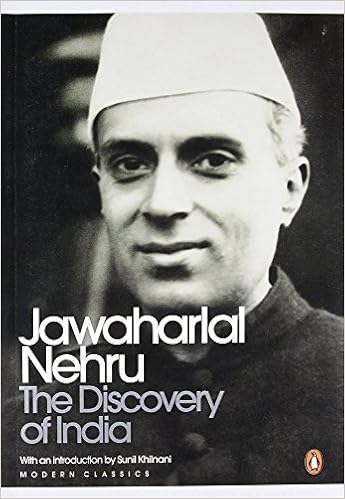
Book review- Discovery of India

Image result for discovery of india
An awesome book that traces all of Indian history from pre-historic times to 1944 when the book was written. As Nehru puts it, the intent of the book is to establish the integrity of the Indian past, history independent of British renditions and make people of India proud of their heritage. Nehru wrote this book while in jail with little access to journals and other books and so this is mostly a work of his learnings from explorations across the country. I am not sure how many of present day politicians possess that understanding of Indian culture and have a vision for future as expressed by Nehru in 600+ pages book.

While book presents interesting bits for anyone who wants to understand our culture and heritage, here are some of them –
  1. Our origins in form of Indus valley civilization was more advanced (stemming from city planning, houses, trade and law) than similar civilizations elsewhere but probably didn’t get noticed because European researchers who came up studying in 18th century focused more on the later (the Greek, Roman etc.)
  2. Our civilization has been based on security and stability via joint family etc. and that makes it successful than any other in West. Indian philosophy is “individualistic under a social structure” which means perfect freedom to think and believe what one liked while adhering to the social norms
  3. While there are many theories of how caste came into being but one theory relates to Aryan conquest of India. Instead of terminating or enslaving the entire population, as was the norm those days, they created a caste system assigning lower caste to people here and upper caste for themselves. While the system had its own shortcomings, caste system allowed people from new conquests to be merged into respective castes.
  4. Coming on to Akbar, Nehru says while he was a great ruler, what surprised him was his lack of sea knowledge, no focus on scientific research, no training of people abroad, and no book printing. This legacy carried forward by later Mughal rulers was exploited by Europeans to bring in their rule in India
  5. An interesting take on why we find certain skills confined to certain religions only. The reason for this is that religions conversion those days were group conversion and not individual conversions and hence the entire village (the villages in those times being organized around skills) would convert
  6. Rise of British is attributed to multiple reasons including conquest of Bengal which gave them enough money to proceed to other regions and then keep adding, possible fluke as individually each of the Sikhs, Marathas, Tipu had defeated them but never together, infighting amongst Indian states and finally fall of Mughal Empire and disintegration of country into smaller states
  7. With British rule, for first time, center of gravity fell outside India and with people who felt that they were superior and that the ‘new’ people didn't want to Indianize.
  8. All talk of great infra development and running of government during British raj came at significant cost. For example, the railway was guaranteed by government of India at 5% return on capital invested
  9. 1857 revolt was essentially a feudal outburst and it was only in 1900s that the real struggle from masses began to oust British

Tuesday, December 3, 2019

Book review- Good Strategy Bad Strategy


A good book to understand good and bad strategy with real life case studies from different companies. One-line summary - good strategy is not about some vision statement but set of coherent actions to tackle one or two identified critical issues. One example that stuck me was case of silver machine that churns silver coins is an advantage but not an competitive advantage. The former is more like a bond. An competitive advantage would accrue when either machine can be engineered to increase output or market be manipulated to increase demand.

Monday, July 15, 2019

Book review- 48 Laws of Power


Wonderful book - Being powerful is an exaggeration but in this world where we socialize with so many people at office and at work, it does help to deal better with everyone. If I would want to pick a few rules, I would say - Never outshine your master, Never get into argument, when asking for help appeal to self-interest, make your accomplishment seem effortless, think as you like but behave like others, despise free lunch, never reform too much at once, assume formlessness. 

I also enjoyed sharing some of the stories with my young son too.

Tuesday, September 4, 2018

Power User Curve over MAU/DAU for understanding users

Anyone in product development understand the importance of power users as they are the ones that drive successful companies. 

Traditionally, we use DAUs and MAUs to measure engagement. However, they do not measure power users. Introducing Power User Curve, which is histogram of users’ engagement by the total number of days they were active in a month/week depending on your business. You can measure engagement as app logins or for specific features which are relevant to your business. 

The advantage with Power User Curve is that it shows the variability among your users: some are slightly engaged. When mapped to cohorts, Power User Curves let you see if your engagement is getting better over time. Data for different features can help us decipher and make more informed decissions. 

Read the article in detail here - https://andrewchen.co/power-user-curve/ 


Sunday, September 2, 2018

This is How Google will Collapse

This is an interesting article on reasons leading to possible collapse of Google empire which has been traditionally been built on ads. 

  • Shift in user trends from search to discovery
  • Lesser ads being delivered because of blocking ads features on devices esp iPhone 
  • Lack of trust amongst users in banner ads
  • Over-reliance on screen ads and missing disruptive trend of voice based search

Read details here- https://hackernoon.com/how-google-collapsed-b6ffa82198ee