Here is an interesting article on what is technical debt, a term we frequently use in agile development and club everything related to system and workflow improvement under it.
As per Peter Green, author of this article, Technical debt is the conscious choice to get to market faster by skipping some steps required for long term code sustainability. For example, team discovered an issue during its regular testing before release of that feature but decided to skip that for the cost of reaching out to market early. Something which was not thought of by PdM or poorly written code to save on time or missed out tasks during regular testing are NOT examples of technical debt.
Btw, here’s a video of Ward Cunningham himself explaining the debt metaphor: http://youtu.be/pqeJFYwnkjE, and some ways in which it has been misunderstood since he coined it, starting at 3:15.
Friday, September 12, 2014


Wednesday, July 9, 2014
Lean vs Agile vs Lean Startup
Ever since I was
introduced to concepts of Lean, Agile and more recently to Lean Startup, I knew these are all related but how exactly wasn't very clear to me. I looked around on web but couldn't get a satisfactory answer. Last month, I had a
chance to hear Adobe's agile gurus, Peter Green and Hart Shafer on this topic. While
I cannot share the wonderful presentation due to copyright issues here is a
very brief gist of it (with my own interpretations and inputs) -
- Agile, Lean and Lean Startup are all related to each other as they talk about responding rapidly to changing environment.
- All of these have distinct principles but they are still related. IMO all of them flow from Deming's Plan-Do-Check-Act model.
- Lean and agile both talk about how to complete work to deliver a product.
- Lean comes more from manufacturing background and therefore focuses on pull and value stream mapping.
- Agile comes from software development and therefore talks about team organization which lean does not say anything about.
- Lean Startup talks more about aspects other than actual product development viz. product ideation, customer discovery and sales. It focuses on customer experimentation
- A combination of all these practices will result in maximum productivity for end-to-end product development.
Thursday, July 3, 2014
How to Earn 60 PDUs and Maintain Your PMP® Certifications
In case you own PMP/ PMI-ACP and are unsure of how to fill in mandatory PDUs, here is a good article - http://www.izenbridge.com/blog/how-to-earn-60-pdus-and-maintain-your-pmp-certifications/
It gives tips to get for people in hurry and for people who have time and there are interesting ways to earn without spending any money.
It gives tips to get for people in hurry and for people who have time and there are interesting ways to earn without spending any money.
Top 10 Indian E-Commerce Sites Traffic Comparison & More
Nice information with graphics - http://trak.in/tags/business/2014/06/04/top-10-indian-e-commerce-sites-comparison/
One of the graphic copied here for reference -

One of the graphic copied here for reference -
Friday, June 20, 2014
Shopping 2.0: a small glimpse (part 2)
In case you missed the part 1, here is the link.
Interesting techie things continued -
4. Amazon Fire phone is yet to be released Amazon phone that besides giving you smartphone capabilities helps you get into Amazon eco-system aimed at increasing sales.

Fire introduces a feature called Firefly that takes advantage of the smartphone’s camera to identify things like movies, books, games, CDs, food and more just by pointing camera at them. Any identified product can be added to Wish List or ordered on Amazon straight from Fire phone. Firefly can also identify songs you’re listening to, and it can even listen to a show, and then let you access that specific scene on Amazon.
 5. WineGlass app helps you choose the perfect Wine bottle by providing information about any wine. The user can just take a picture of a wine list at a bar or restaurant. WineGlass will instantly scan the image and give you an interactive version on your
This kind of scanning and exploratory capability can be extended to any app.
iPhone. WineGlass shows you ratings, reviews, price information and food pairings for each wine, helping you make smart choices for your own taste and budget.
Interesting techie things continued -
Fire introduces a feature called Firefly that takes advantage of the smartphone’s camera to identify things like movies, books, games, CDs, food and more just by pointing camera at them. Any identified product can be added to Wish List or ordered on Amazon straight from Fire phone. Firefly can also identify songs you’re listening to, and it can even listen to a show, and then let you access that specific scene on Amazon.
5. WineGlass app helps you choose the perfect Wine bottle by providing information about any wine. The user can just take a picture of a wine list at a bar or restaurant. WineGlass will instantly scan the image and give you an interactive version on your This kind of scanning and exploratory capability can be extended to any app.
iPhone. WineGlass shows you ratings, reviews, price information and food pairings for each wine, helping you make smart choices for your own taste and budget.
Thursday, June 12, 2014
Measuring sports sponsorship (McK article)

With Football WorldCup rounds the corner, there is a nice article from McKinsey on how to measure Sports Sponsorship. Here are salient points -
- Articulate a clear sponsorship strategy—the overall objective of their portfolio, the target demographic, and which stages of the consumer decision journey (awareness, consideration, purchase, loyalty) sponsorships can support
- Find Cost per reach and optimize according to that. Favor exposure to the target demographic over total numbers.
- Increase Unaided awareness per reach - Besides acquiring sponsorship rights,its important to spend on activation—that is, marketing activities such as promotional booths and merchandise to promote the sponsorship.
- Measure Sales/margin per dollar spent - Track data on spending and reach (among a host of other media variables) over an extended period to establish links between sponsorships and sales, and then isolate the impact of sponsorships from other marketing and sales activities.
- All sponsorship activities should enforce consistent brand image so that Long-term brand attributes are enhanced
Tuesday, June 10, 2014
Shopping 2.0: a small glimpse (part 1)
Here are some interesting (techie) things happening on shopping front -
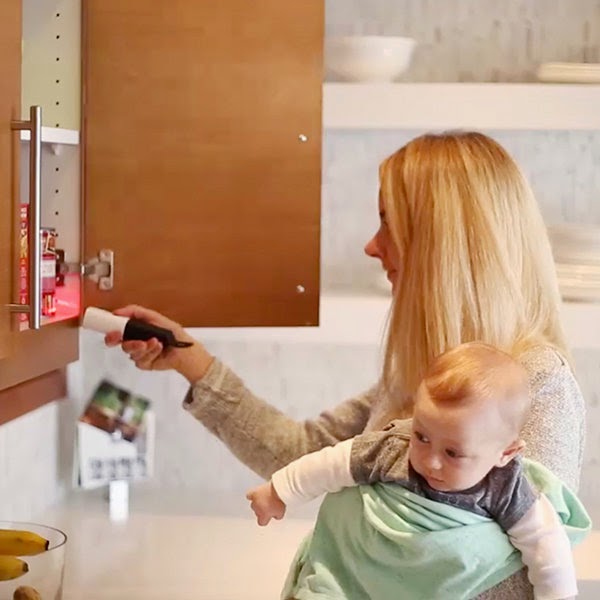 1. Amazon Dash is a small hardware that helps capture any shippable item into a 'Dash' via scanning that product's bar code or saying the product name to the device, which can then be viewed as a list on Desktop or mobile device.
The beauty of this device is that you don't have to remember and keep recording your emptying groceries. Just use this device and capture it.
 2. Hiku is a similar device as Amazon Dash just that while Amazon Dash ties itself to Amazon Fresh, Hiku has no such association to any marketplace yet.
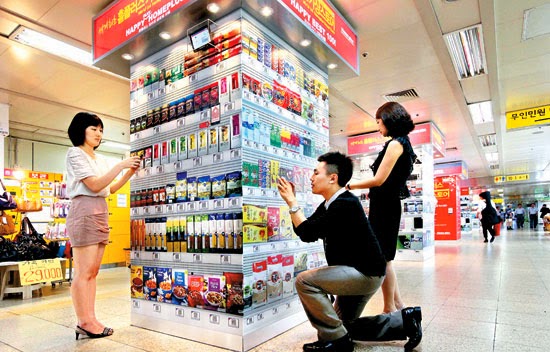 3. Tesco's virtual store as the name suggests is a virtual store wherein large images of life-size store shelves filled with goods are pasted onto walls and doors. Each good has a small barcode which shoppers can use to take pictures and thus create a goods cart.
"You place an order when you go to work in the morning and can see the items delivered at home when you come home at night," said a spokeswoman for Homeplus.
Read part 2 for more techie updates.
1. Amazon Dash is a small hardware that helps capture any shippable item into a 'Dash' via scanning that product's bar code or saying the product name to the device, which can then be viewed as a list on Desktop or mobile device.The beauty of this device is that you don't have to remember and keep recording your emptying groceries. Just use this device and capture it.
2. Hiku is a similar device as Amazon Dash just that while Amazon Dash ties itself to Amazon Fresh, Hiku has no such association to any marketplace yet.3. Tesco's virtual store as the name suggests is a virtual store wherein large images of life-size store shelves filled with goods are pasted onto walls and doors. Each good has a small barcode which shoppers can use to take pictures and thus create a goods cart."You place an order when you go to work in the morning and can see the items delivered at home when you come home at night," said a spokeswoman for Homeplus.
Read part 2 for more techie updates.
Subscribe to:
Posts (Atom)