Tuesday, April 6, 2010

m-banking for the BOP

The McKinsey article on financial services using mobile for the people devoid of banking, referred as unbanked, (Capturing the promise of mobile banking in emerging markets) provides an interesting insight to how mobile phones can be used to integrate a wider population into banking net. Not only social inclusiveness, it also brings in a large portion of informal money into the formal system thus helping the overall macro-economic indexes of the country. There are no two opinions on how banking inclusiveness reduces the risk to the saver and the borrower.

There are successful models on m-banking which have been used across the world, especially, by M-Pesa in Kenya and Smart Money and GCash in Philippines. Please see that m-banking here refers to micro-money on mobile, something of the range of Rs 50-500 in Indian context which is uneconomic for banks of today to work with. And that is where a mobile comes in to reduce the overall cost of banking. Given, the bank penetration rate in India at less than 25% compared to mobile penetration rate at 46%, Indian market can be an ideal ground for such mobile banking for the people at bottom of pyramid.  

The model as followed by m-Pesa is illustrated below –


As pointed out by mcKinsey too, for the m-banking model to succeed, the provider needs to have skills in both telephony and banking. In India, people trust and recognize the mobile brands more than bank brands. So the initiative has to be from mobile operator. Given their reach, I personally feel, BSNL, Vodafone and Airtel could be possible players in this arena. And yes, first mover advantage should definitely accrue !

And before I end, a note on some progress in this area- Nokia Money has tied up with Yes Bank to provide such services. Read here -> (http://telecomtalk.info/nokia-to-launch-mobile-payment-facility-nokia-money/19875/). More details on what is on offer is yet to be seen. 

Monday, April 5, 2010

Bond STRIPS allowed in India

An interesting development has taken place in bond market in India. The RBI has allowed ‘stripping’ of bonds from April 1, 2010. For the uninitiated, STRIPS, or Separate Trading of Registered Interest and Principal of Securities (STRIPS) refers to a process of separating principal and coupon payments on bonds and turning them into zero-coupon securities.

The advantages that accrue from STRIPS is multiple – One, it allows corporate to plan their payments and receivables for required amount per the STRIP that they buy/ sell. Two, it allows for a more accurate price determination in the market as the strips provide liquidity. Three, there is no reinvestment risk arising from coupons.

To start with, here is what RBI has allowed-
1. 1.  Stripping for bonds with coupon or maturity dates of Jan. 2 and July 2, irrespective of the year of maturity.
2.  Minimum amount to be submitted for stripping will be INR10 million and subsequently multiples thereof
3.  Reconstitution, which is the reverse of stripping, allowed. That means the coupon and the principal are reassembled into the original government security.
4.  The stripped financial instruments will be reckoned as eligible government securities for statutory liquidity ratio (SLR) purposes.
5.  RBI will not charge any fees for stripping/reconstitution of Government Securities.

Among the existing bonds, the 6.35 percent 2020 bond and the 9.39 percent 2011 bond are eligible as per their coupon dates.

Friday, April 2, 2010

Impact to bank's bottomlines due to fluctuating bond yields

Bond yields have an impact on prices of bonds- they share an inverse relationship. If yield rises, prices fall and vice-versa. Bond yields have an impact on Indian banks bottomlines because the banks have a substantial investment in govt. bonds necessitated by statutory liquidity that banks have to maintain per RBI guidelines.


Lets take an example of SBI in this case. The following calculation takes the standard g-sec (10 yr, 6.35% coupon). At 7.85% yield, this was available at Rs 89.895. 


Now if there was to be 10 bp increase in yield, it would mean yield to rise to 7.95% and resulting price as Rs. 89.2698. 

Given SBI domestic investments and proportion of that in SLR and AFS (Available for Sale), it comes to Rs. 60,732 crore. A Rs. 0.62 loss on Rs. 100 of bond value means Rs. 380 crore for SBI. 
Because every loss in AFS investments (made by mark to market provisions) have to be compensated, this would mean more money parked by SBI and less available money for credit. 


P.S: All figures above have been picked from Economic Times, April 1 edition. 

Thursday, March 25, 2010

Interesting apps in social space

Two interesting apps that I have come across in social space- 


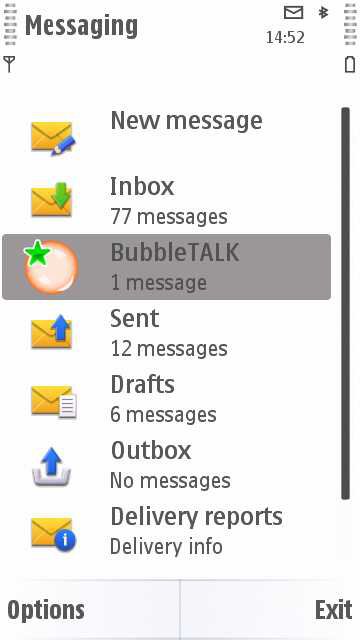
1. BubbleTalk- Lets you send voice messages to anyone in the world – without calling! It is equivalent of twitter where one broadcasts (called Send Bubble) his status as a voice rather than text. Your followers can then hear you by dialing a fixed code. 


2. Socially- This app resides on your mobile phone and embeds dynamic Social Network data and context into the Address Book, Incoming Calls, Idle Desktop Screen etc. 


Wednesday, March 17, 2010

Asia and Marketing template mentality

Prof. Dae Ryun Chang has been writing interesting things about marketing in Asian markets. In his blogs on HBR (Does Your Strategy Rely on a "Pan-Asian Identity"? , In Asia, Marketing 101 Doesn't Work), he talks about the fact that a common marketing template cannot be applied to entire Asian markets and marketers who are used to such a style of working should better adapt themselves. 


The author points out how the Asian markets are complex markets where not only each country has a distinct culture but even within the country (like India, China) there are multiple ethnical groups whose taste and preference don't match. Any company that plans to dominate the Asian markets would have to understand the nuances of these markets and then create multi-brand strategy targeted at individual regions, give a local flavor to the products and involve the local community. 

Tuesday, March 9, 2010

Marketing on Social Networks

Social networks such as Facebook, LinkedIn, MySpace have become an inseparable part of our lives. Empirical studies have shown that click through rate for ads on these sites are very low. This is disappointing both for social network companies which expect to monetize from the network as well as for the companies which display ads. The reason is simple; people are on social networks because they are trying to find solution to their offline problem of networking in real world. For looking at ads they would probably be looking out to general content sites that offer specific entertainment content.

The solution is (as Prof. Piskorski of Harvard) puts it a shift from social media to social strategy. Instead of looking social networks as another media, a comprehensive strategy needs to be put in that exploits the network effects of the social sites. The marketing efforts have to be around ‘Viral Marketing’. Since social networks offers friends, and friends of friends and friends of friends of friends, the best way is to use word of mouth publicity. Here are few suggestions-

a. Offer something for free to a randomly selected set of people commenting on your Facebook (or any other social network) page.


b. Form a community and invite people to be part of that. Obviously, there has to be some incentive for people to be in. The strategy can be customized depending on product brand by forming a restricted community or open-for-all community. 


c. Float a creative application or a creative picture (with small brand logo on that) that people post onto their pages. For example, a car company coming with a new model could float a small car game application or create pictures.

d. Incentivize people to update their purchases on networks. For example, a sunglasses company could offer a $10 rebate to users offering to upload their purchase and shop from which it was bought status on Facebook.

e. Engage people who are active on Facebook and other social networks into promoting your brand. 

Sunday, March 7, 2010

Using behavioral finance for marketing


Since the time I was introduced to the concept of Behavioral Finance by Prof Uday Damodaran at XLRI, I have been greatly influenced by this topic. For the uninitiated, Behavioral Economics and Finance is a branch of economic and financial analysis that tries to understand economic decision of consumers including investors through social, cognitive and emotional factors. The premise is that human beings show repeated patterns of irrationality when making decisions.

A search for behavioral finance on Google would throw up multiple theories explaining this but I am trying to present below a very simplified interpretation and how it has been used by marketers around the world to their advantage.

1. Overconfidence- As human beings, we are generally overconfident of the results. This explains why even knowing the probability of success with a lottery, people would still buy it. This also explains why an investor would get into a high debt leverage knowing fully well that it may turn against him in bad times.

2. Herd like behavior- We tend to believe what the majority is doing. This 'behavior' is exploited by companies rolling out an IPO. Marketing glitz talking about company's prosperity, positive critic’s reports tempts investors into investing into that stock. As another example, stock analyst at a trading company, for example, would tend to buy what his colleagues are buying ignoring his analysis and judgment just to be sure that he won’t be fired in case his preferred stock turns out to be bad.

3. Loss Aversion- People feel pain of loss twice as much as they derive pleasure from an equal gain. A good example for this would be that people tend to retain a stock than to sell it at minimal loss knowing fully well that it would not give them a profit in near future. Mentally they would be most happy if they could even sell such a stock at 1 cent profit.

4. Consistency in thoughts- As human being, we have a tendency to have a thought process and then to stick to it. As a result, we tend to overlook any inconsistent information. Again an example could be about the way people would hold onto stocks and their investment irrespective of the updated market information available.

5. Emotional Attachment- Taking decisions based on emotions, such as love for a country, love for a brand, love for a region etc. There are many examples to this and has been used frequently by marketers across the world.  


6. Poor computation- People put undue weight on recent events and too little on far-off ones; they cannot calculate probabilities well and worry too much about unlikely events; and they are strongly influenced by how the problem/information is presented to them.